








JK Boots: Your Top Questions Answered Part 1
If you’re new to JK Boots or thinking about buying a pair or even just bought some recently, you might have a few questions that you are curious about. I’ve put together a few that we’ve frequently been asked, so let’s dive in and get started.
What kind of leather do you use?
We use two main animal hides. The first one is cowhide, that is used in pretty much everything, and the second one is bison leather. Thickness is measured by the weight, and cowhide has about an 8-9oz weight. In millimeters, it’s around 3.3-3.6mm thick. We use the cowhide for everything, from the upper, quarter, tongue, vamp, the counter, the insides like the insole, midsole, shanks, and the arch support. Everything is cowhide. Even the thinner tongue leather is cowhide and the lining under the vamp is a split suede. On the bison boots as well, the only parts that are bison are the vamp, quarters, and counter with the rest being cowhide. These are the two main leathers we use with varying weights and tannages depending on where it is used in the construction of the boot.

Do we use steel shanks?
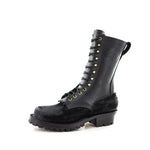
We only use steel shanks on one model which is the Climber boot. On the Climber model we use a combination of leather and steel shanks. The idea behind using it in those is you want that arch area to be super reinforced when you’re climbing either on the poles or trees where your gaffs might sit so it doesn’t dig into your foot. So it’s reinforced with both the steel and leather shanks. For the rest of our boots however, we just use a leather shank since it’s better overall for longevity and general comfort. It won’t snap or crack and has some give to it unlike a steel shank. It’s really important because many times people talk to us about the comfort of the arch and that’s because of the leather arch support and shank that we use.
What is the difference between the Superduty and the Fire Inlander?
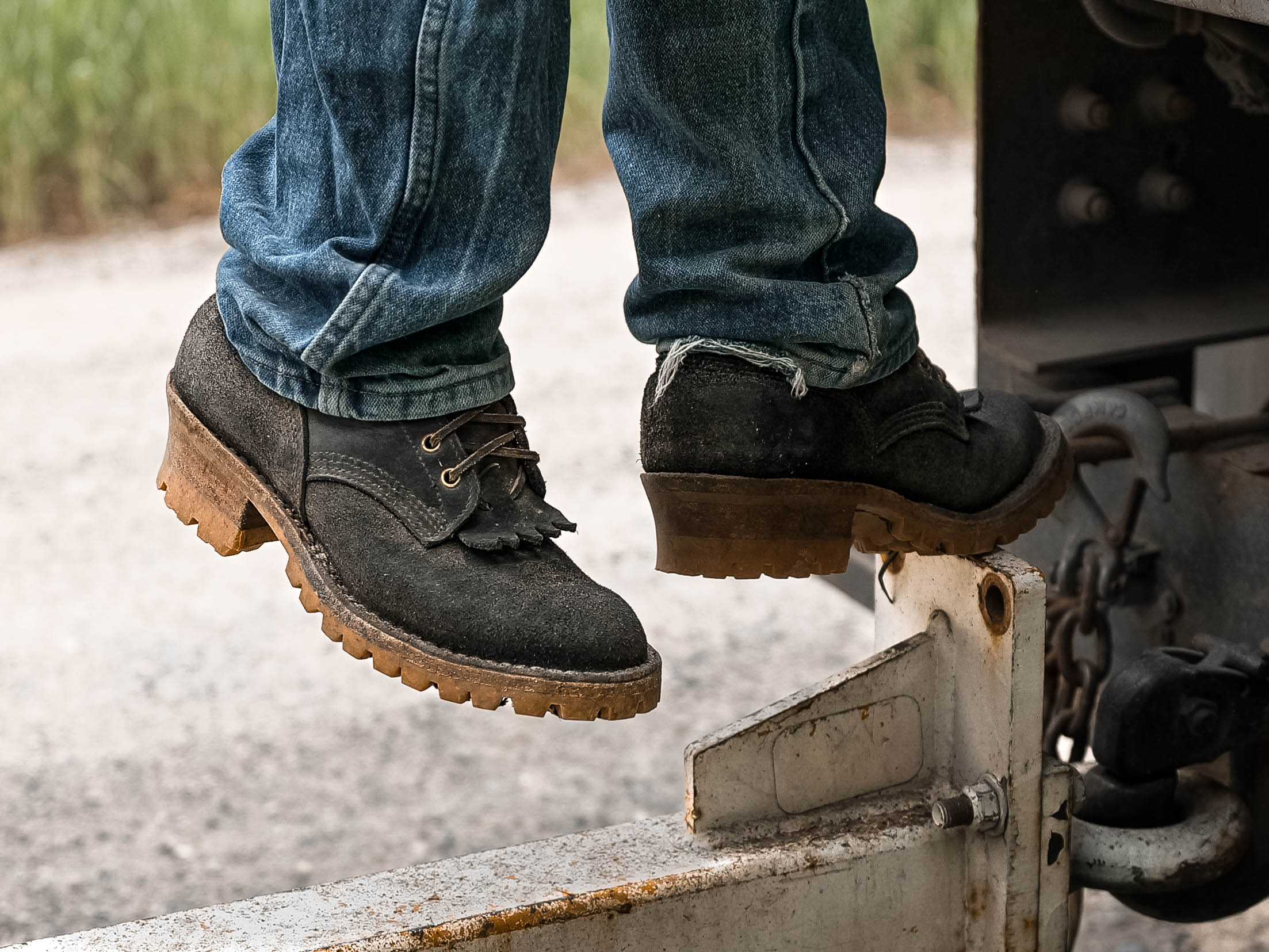
This is a great question that we get a lot. The answer is other than the name, they are an identical model. The reason they are separated is because originally we only had the Fire Inlander model which was the boot sold to wildland firefighters, loggers, and mechanics and many other people around those same lines of work. But there was some confusion with some people thinking that it was only for firefighters, so we created the Superduty model for understanding and branding purposes. Build wise they are pretty much identical using all the same materials. Both great just with different names.

What’s the best sole for walking on hot steel in the summer and ice in the winter?
Good question, there’s a couple ways to go here. When walking on hot steel surfaces or even asphalt or gravel, there are two soles that we recommend. We carry the Vibram Red X sole that is made to resist very high temperatures exceeding up to 400°F. It’s also chemically resistant so it works well for any kind of hot surface. We use this in our Fire Inlander and Superduty boots and is what we recommend for any hot surfaces. The secondary sole is called the Alpha sole that is also made by Vibram and it is technically an asphalt sole but is in the same category for heat resistance as the Red X.

In terms of ice and the winter, there’s a mixed answer here. Vibram makes a sole called the Fire and Ice sole and it’s the classic 100 lug style and comes with a White X instead of a Red X. It’s very soft rubber and the idea with it is that it will resist the heat and stay grippy and malleable and quality in freezing temperatures. Our Arctic models come standard with this sole and it has been great working really well. Ultimately when combining rubber and ice and something like a concrete floor, there is very little grip so the White X is the best thing for that.
Are JK Boots Goodyear Welted? Will we ever make Goodyear Welted boots?
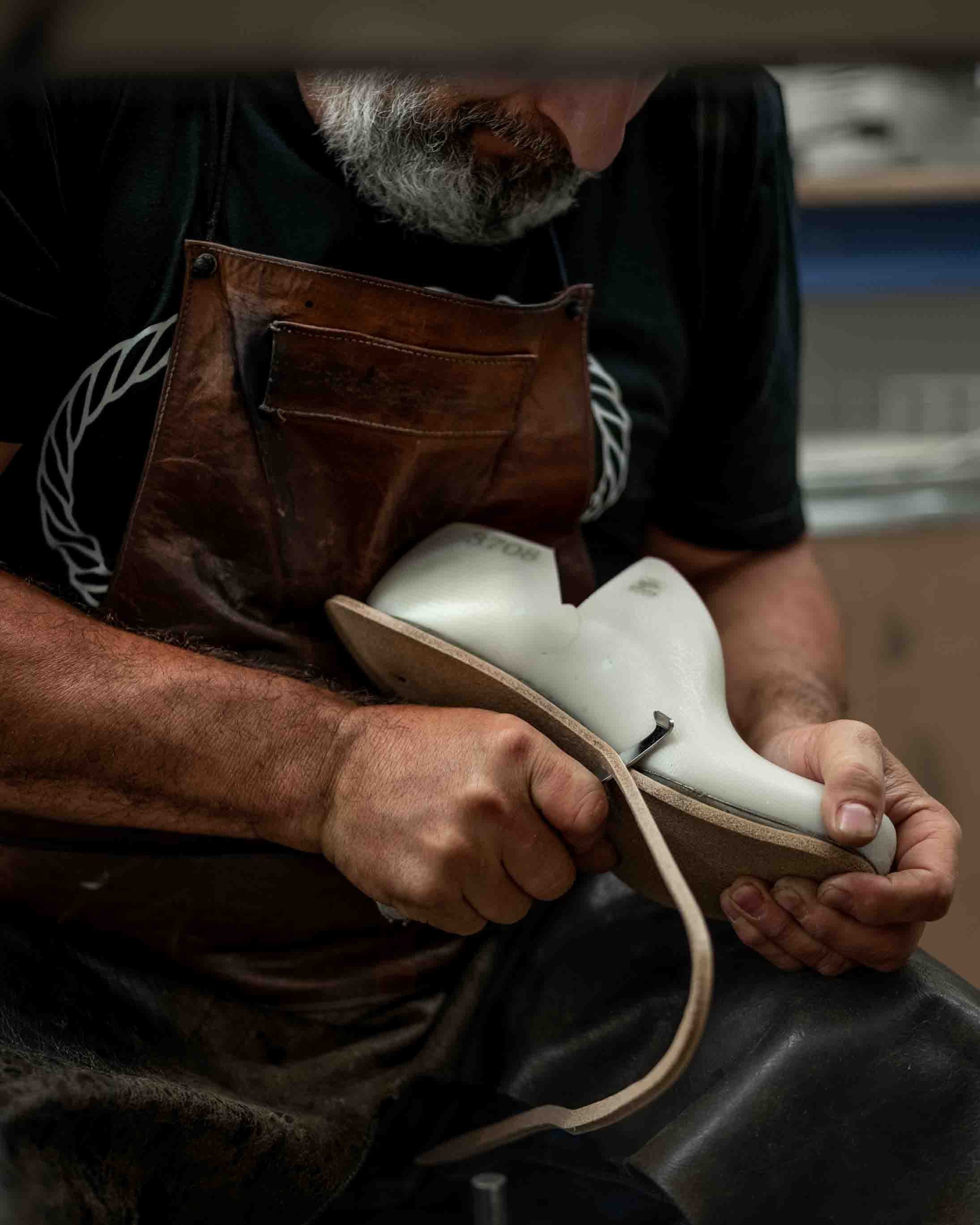
No, our boots are not goodyear welted, our boots are built using what’s called a stitchdown construction. A Goodyear Welted boot is a heavily machine made boot. There’s nothing wrong with it, it’s actually very good, but it’s just not as good as a stitchdown boot. The way that we do this on our boots is with lasting the boot by hand, opening up the vamp, installing the arch support, bottoming the midsole and stitching through that. This is a super tight construction and it’s really hard to have a boot built this way leak or fall apart as well as being the easiest type of boot to repair. A Goodyear welted boot by design is put together on a welt, which is a thin leather layer running all the way around the boot that is stitched through the welt, into the vamp, into the insole. This is all run through a machine. These two methods of stitching are not equivalent because in a Goodyear welt you’re only stitching together the welt to the sole, but with a stitchdown construction you’re stitching the vamp to the midsole to the sole. This stitchdown style is a lot more serious and tightly made.
We will probably decide at some point to make a line of Goodyear welted boots because it is a lower cost alternative for a good entry level boot. It all comes down to what you actually need. So the Goodyear welt is a pretty great option but If you want the best and highest quality, then a stitchdown construction is what you actually need.
How long do the wedge soles last before they need to be resoled?
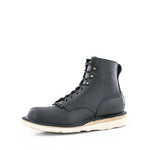
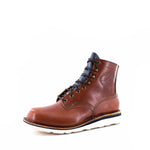
This really depends on the wearer or the user. I’ve seen wedge soles wear down as quickly as 7-8 months and last as long as 1.5 years. Wedge soles get burned a lot when you’re on gravel or abrasive surfaces because it’s a softer sole. They do really well on any kind of concrete floor or indoor environment that’s not super abrasive. It’s a great sole, just softer. By nature it will wear a little faster so minimum you’re looking at about the 7 to 8 month mark if you’re really hard on them while they could last you up to 1.5-2 years with normal wear.

This covers the first part of some of the most common questions we get. Hopefully this helped clear up a few things and gave you a better idea of how our boots are built and what to expect.
I’ve got a few more questions to cover as well so if you are still deciding or want to make sure you’re getting the most out of your boots, the next section is worth checking out. Read part 2 here.
Watch the full breakdown below where I walk through these questions in a little more detail.
Leave a comment