









Inside the JK Boots Forefront: What You See When You Cut It In Half
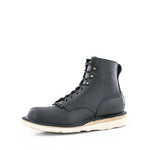
The Forefront is one of our most popular boots because it's a light, flexible, 6-inch wedge sole work boot built for the labor force and fully rebuildable and resoleable to last 10-plus years. To prove its toughness and what's inside, we cut one in half. Here's a full walkthrough of every layer and detail.

Upper Leather: 8-9oz Full Smooth
Unlike some of our other boots that use a rough-out lower and smooth upper, the Forefront is fully smooth. Our idea for the Forefront was to design it for construction, shop environments, and indoor work, so we felt like smooth leather matches that the best.
The leather itself comes in at our default 8-9oz thickness. This is 50% thicker leather compared to any other boots and what allows the uppers to go 10-plus years through multiple resoles and rebuilds.

We also choose our hardware deliberately to make sure it hits the right balance for durability. Too hard and it shreds the laces or too soft and the eyelets wear out fast. This is an area we are constantly working to improve as well.
Tongue: Double-Layered with a Rough-Out Center Patch
The Forefront uses what is our proprietary "tangler" tongue construction. Rather than just a single layer, it is double-layered using two pieces of leather sewn together. That initial tongue with an added rough-out leather patch in the center where the laces make contact. After years of friction from lacing, that center patch handles the wear so the tongue doesn't give out prematurely. It's also beveled to about the first eyelet so your foot slides in and out easily.

Lining & Vamp: 11 Ounces of Leather Around Your Foot
Where the vamp and lining meet is one of the most telling spots of the quality of the boot and a testament to the work we do. You're looking at an 8oz-plus vamp and an additional 3oz lining. That's roughly 11 ounces of leather wrapped around your foot. The lining is installed suede-side in because sueded just wears better against the repeated friction of sliding your foot in.

The Leather Counter: Long Term Ankle Support
This is the structural centerpiece of every boot we make. The Forefront uses a 10-iron oak tan leather counter placed in a dedicated counter pocket that is layered between the upper, the quarter, the backstay, and the counter pocket itself. That's multiple layers of leather that are there to protect your ankle in every direction.
It's fully placed with no gaps or possible movement. Most mass produced boots would use cardboard or plastic and even some brands that would use leather counters typically make them much thinner. This is what helps prevent any twisting or spraining of your ankles so that you feel secure and don't even have to worry about that happening if you slip or misstep on the job site.

Insole, Cover Shank & Flexi Midsole: The Foundation
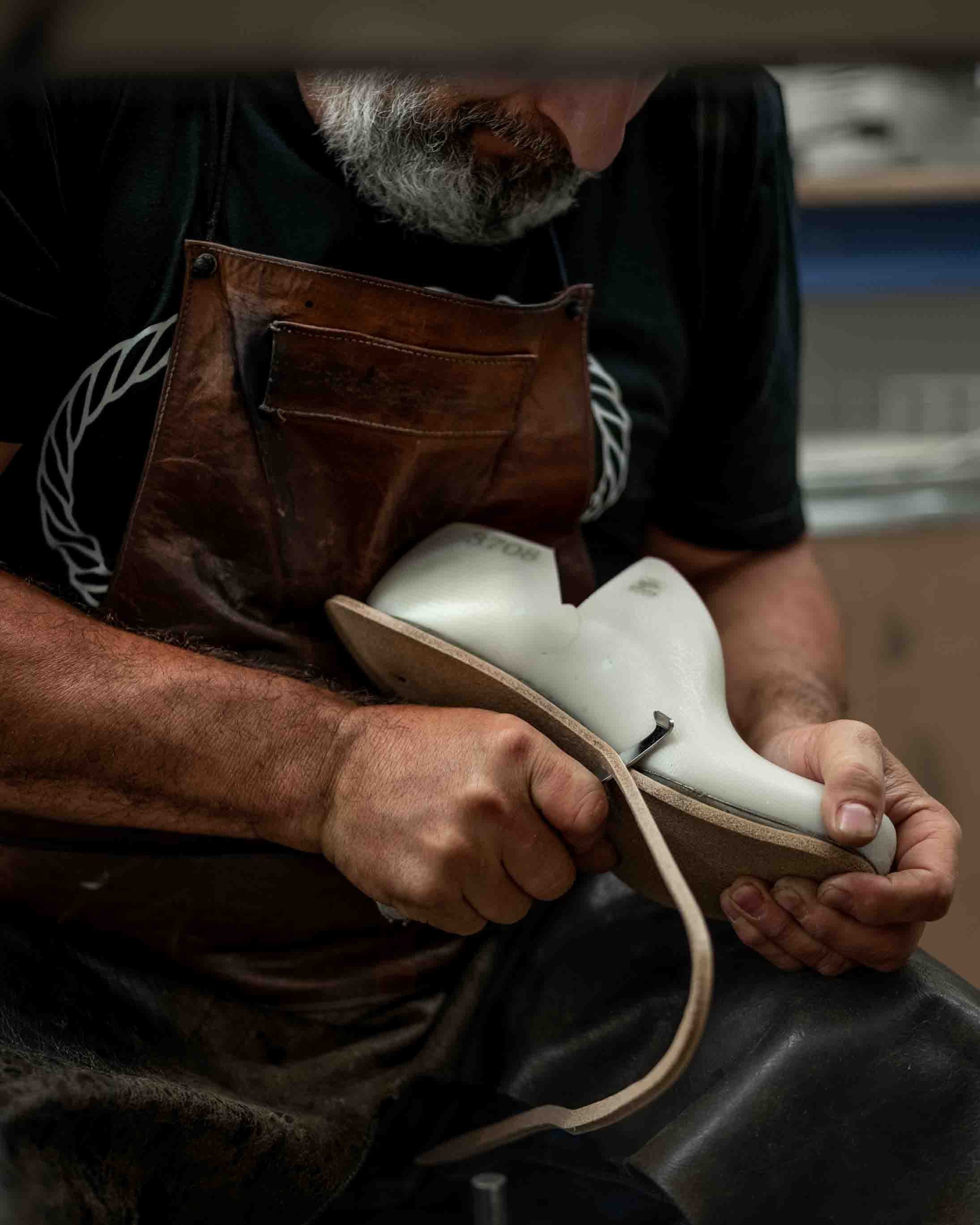
9-Iron Oak-Tan Leather Insole - Running from heel to toe, this thick, stiff insole is what you're standing on through 10,000 steps a day. It breaks in and molds to your foot over time, and typically in a resole, it stays in the boot meaning you can carry across that broken-in comfort for multiple years. A sock lining also covers the upper half of the insole to just cover any possible nail heads that might have gone through the footbed.
Cover Shank - A thinner black leather layer that runs from the heel to the ball of the foot. The Forefront has a lower arch profile than the Superduty/Fire Inlander boots, so rather than going with a thicker oak-tan shank, we use a slimmer leather cover shank. It's a little more flexible and is still leather so it breaks in naturally and won't crack over years of wear.
Flexi Midsole - This is what makes the Forefront feel different than our traditional heavier duty work boots. The 12-iron midsole doesn't go the full length from heel to toe but instead is feathered out at the ball of the foot. That taper again gives it more flexibility and mobility allowing it to bend with your foot rather than acting more like a stiff platform. While that full midsole is useful for some people, not everyone needs it so this just allows for more flexibility without sacrificing that support.

Rubber Slip & Vibram Christy Outsole
Below the midsole sits a rubber slip that runs from heel to toe. It adds a small amount of thickness and gives that rubber-to-rubber adhesion for the Vibram Christy outsole. This is just better rather than having rubber to leather.
The Vibram Christy outsole caps it all of. It's thick, durable, and performs particularly well on concrete and hard indoor surfaces while still doing well outdoors. It is worth noting for heavier snow or wet conditions, our Arctic our Honey Sole options will probably be better suited, but for general labor, shop work, and everyday wear, this sole is excellent.

The Thread That Ties It All Together
One last little detail that is visible in the cut is the Technora fire rated stitching thread. It's so tough it even dulls the blades we use to cut it. We mention it an often but that's because it's the best thread available and we use it across all of our boots, not just our Fire Inlanders.
All this put together is what makes the forefront a genuinely well-built boot with materials chosen for longevity. If you don't have a pair, I genuinely encourage to get a pair, you can't really go wrong with it. Check out our sizing page to get sized up and try a pair and leave any comments or questions about the Forefront down below.
Words and photos only go so far, watch the full cut-in-half breakdown below.
Leave a comment